In the past weeks, one topic I wanted to focus on was the Cultural Revolution in China. I was intrigued by the topic because the expert we read last week, “The Three-Body Problem,” talked about the cultural revolution. It added a twist, however, because it gave historical information and used fantasy to tell the story from the perspective of a character. The way the author did this made me interested in the topic, and I wanted to learn more about the revolution. It’s interesting how the process started because Mao’s movement gave the government a horrible light. These actions sparked the fuel for a course.
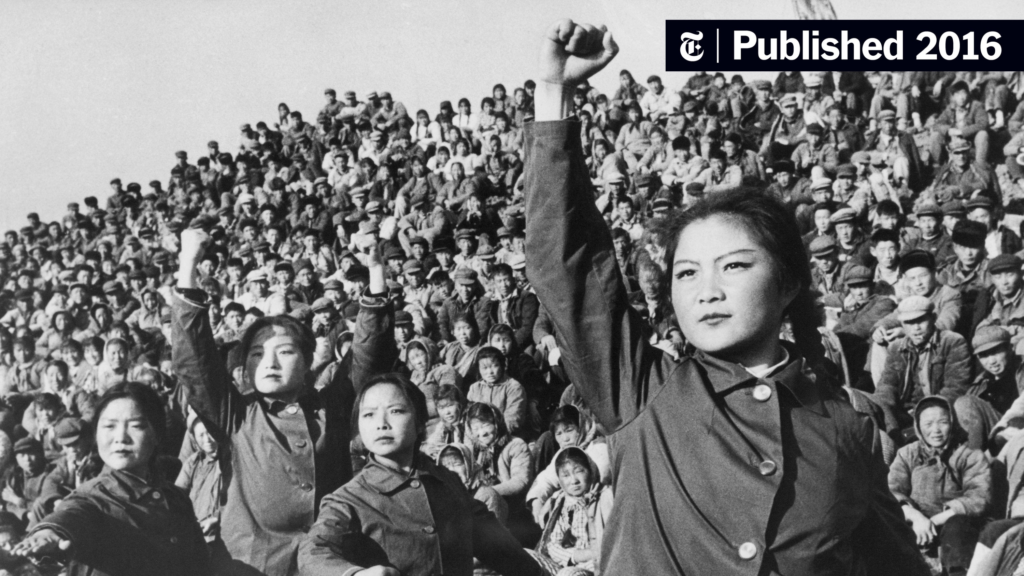
Ramzy, “China’s Cultural Revolution, Explained.”
The piece we read in class opens up on the “Madness Years,” immediately discussing conflict. Historically the new phase of the revolution started on January fourth when authorities in China wanted to sabotage the production in Shanghai to slow down the cultural process. This frustrated many student-run organizations with the Chinese government because of the rumors they heard about what the government was doing. They listened, “The integration of students with workers and peasants is the inevitable road by which the students will transform their world outlooks and carry to success the great cultural revolution.”(Project MUSE – Educated Youth and the Cultural Revolution in China). This sparked the start of the split in China between the younger and older generations which “The Three-Body System” focuses on. The rumors made the people of China urge each other to follow what the revolutionists did in Shanghai. The revolution shed light on how bad the Chinese government was because of its inability to lead. “This was due both to their lack of political/administrative experience and to their inability to resolve factional disputes within their ranks and with other revolutionary mass organizations.”(Project MUSE – Educated Youth and the Cultural Revolution in China). The political turmoil created this massive division in China and led to violent demonstrations.
The “Three Way Alliance” was a big part of the cultural revolution because it unified the revolutionary organizations. It was believed that power seizure occurred only through the alliance between these three organizations. The multiple revolutionary organizations struggled to find unity. Still, articles were created that It was thought that the cadres lacked the discipline and knowledge to be a severe threat to the Chinese government, but they had some legitimacy. The two major revolutionary organizations were the PLA, Red Guard, and the Cadres. The Red Guard and Cadres distrusted each other but joined in arms to form a strong revolution. The alliance wasn’t strong, with the Red Guard in a psychological crossfire because the cadres and PLA “attacked for their factionalism and ego indulgence; they were being indiscriminately suppressed by the PLA, whom they had been taught to rely on as a friend of the people”(Project MUSE – Educated Youth and the Cultural Revolution in China). This struggle forced them into a “Three Way Alliance” that would hopefully help take over the Chinese government.
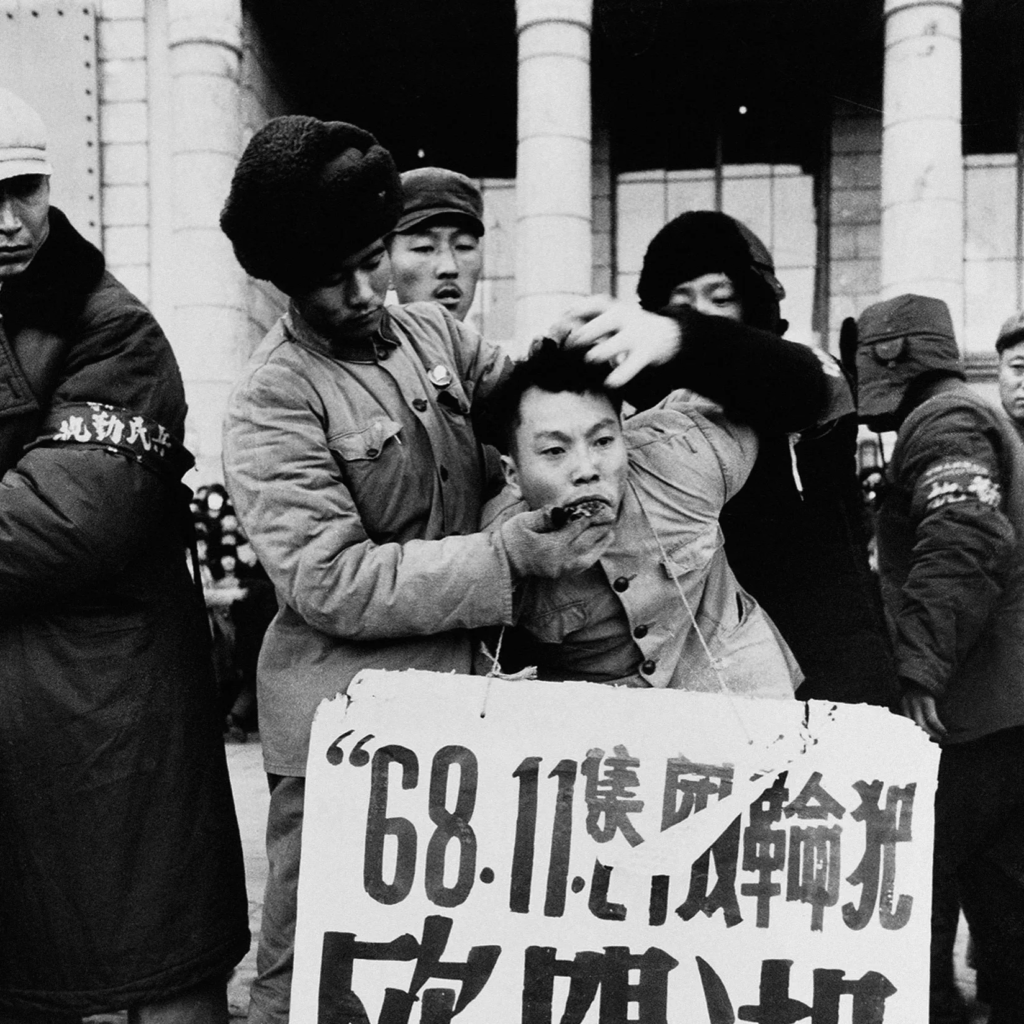
“A New History of the Cultural Revolution, Reviewed | The New Yorker.”
In the excerpt from class, I find it very interesting how the author told the historical view on the Cultural Revolution. The author chose to use the story as a scientific genre but also gave a history of the revolution and how it was during that time. They told us stories about the brutality and how the split was. The excerpt starts by explaining perspectives from each revolutionary organization and giving insight into their conflict. The author goes into depth about the innocence of the fighting people and makes you want to sympathize with them. He explains how a “young girl emerged at the top of the building, waving the giant red banner of the April Twenty-eighth Brigade. Her appearance was greeted immediately by a cacophony of gunshots”(Liu, Cixin. The Three-Body Problem. Translated by Ken Liu. New York: Tor, 2014). This can give the reader a view of how bad the revolution is and how innocent people die because of their beliefs. Throughout the rest of the reading, we learn how brutal this period of China was. The excerpt gives a specific example of Ye Zhetai and his struggles in the cultural revolution. Ye Zhetai was a professor in China that was on the wrong side of the artistic process. The split between students and professors was a severe problem that led to violent conflicts. He was involved in one of these cases where he didn’t evacuate fast enough, and his wife and her students found Ye and did horrible things. Ye’s wife and her students had a different view of him, leading to their torturing of him. This is astonishing since his wife would use her students to capture and torture her husband. She did all this because she was displeased with the political views, and both sides became violent. Historically academics are known to be targeted in instances like this because of the ideological push imprinted on students. Ye prioritized his beliefs and having a voice, which got him tortured and killed.
Liu, Cixin. The Three-Body Problem. Translated by Ken Liu. New York: Tor, 2014
Project MUSE – Educated Youth and the Cultural Revolution in China

Leave a Reply